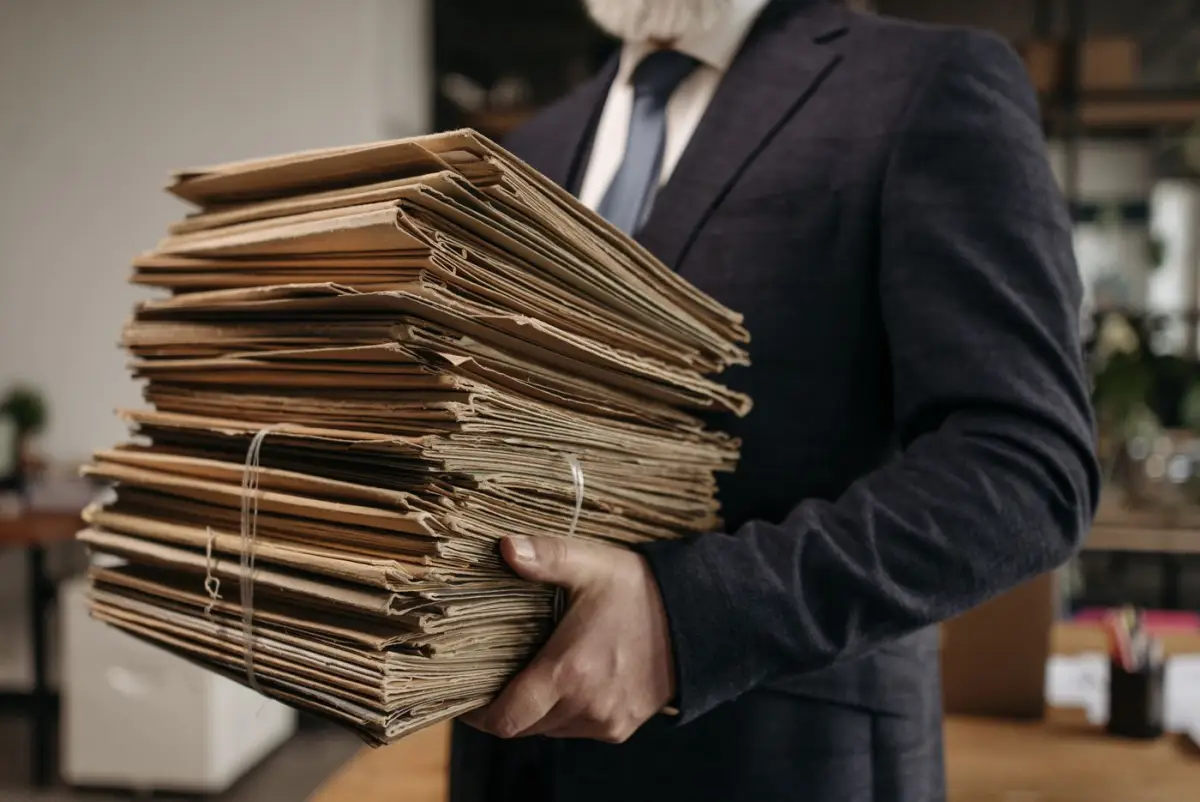
The archive is usually the heaviest and least popular item in an office move. Boxes of binders are heavy, take up space in the van and in the new office, and nobody knows exactly what is in them. A move is therefore the ideal moment to go through the archive, legally shred part of it and move the rest so that it can be found at the new address.
Note: this article is not legal or accounting advice. Retention periods depend on the type of document and the company's situation. Always check them with your accountant or tax adviser before shredding.
Which documents are usually kept and for how long
An indicative overview based on Czech regulations in force (as of 2026):
- Accounting records (documents, accounting books, inventory lists, depreciation plans) usually for at least 5 years from the end of the accounting period they relate to.
- Financial statements and annual reports usually for 10 years.
- Tax documents of VAT payers usually for 10 years from the end of the tax period.
- Payroll sheets and records for pension insurance considerably longer. The period was extended in recent years (previously 30 years, now 45 years), and a shorter period applies in some cases. Caution is advisable here.
- Contracts usually for the duration of the obligation and the limitation period, some types longer.
The periods are mostly counted from the end of the accounting or tax period, not from the date the document was created. A document from January 2021 therefore does not necessarily go to the shredder in January 2026.
The process: review, sort, decide
- Make an inventory. A simple table is enough: shelving unit, shelf, what it contains, which years.
- Split the archive into three groups: to be moved, to be shredded, to go to external storage.
- Have the "shredding" group approved by your accountant or the person responsible. Write the decision down.
- Shred with a certificate. For documents containing personal data or trade secrets, it is advisable to use a company that issues a certificate of destruction.
- Prepare the rest for the move.
Personal data and GDPR
Archives often contain personal data of employees and clients: personnel files, payroll records, contracts. During the move it is important that these documents are not freely accessible. Move personnel files in closed and sealed boxes and decide who hands them over at the old address and who receives them at the new one. For documents you no longer need, secure shredding also fulfils the obligation not to keep personal data longer than necessary.
How to pack the archive so it can be found
- Sturdy archive boxes, not banana boxes. Binders are heavy and a soft box gets crushed in the van.
- Pack shelf by shelf. One box corresponds to one part of a shelf, not "whatever fitted in".
- Number by position: shelving unit, shelf, order. For example R3-S2-04.
- Write the contents on the box as well (for example "Received invoices 2023 January to June"), not just the number.
- Do not overfill the boxes. A full box of binders is heavy and the risk of it tearing grows when carried up and down stairs.
Move the archive before the rest of the office
The archive is not used every day. If you move it one or two weeks before the main move, you free up space in the van and time at the weekend when the workstations are moved. At the new address you can calmly put it on the shelves in the original order.
Safes and metal cabinets
If you have a safe or metal filing cabinets, deal with them separately. Weight, dimensions, door width, stairs and the floor load capacity of the new office all matter. Send the moving company the type or a photo in advance, so that the right equipment and enough people are on site.
External storage instead of office space
Documents you must keep but almost never need do not have to take up space in the new office. An external archive or a storage unit is usually cheaper than square metres in an office building. A move is a good opportunity to split things up.
Who is responsible for the archive during the move
It pays to appoint one person who knows the archive, typically the accountant or office manager. They approve what is shredded, check the packing and verify at the new address that everything is stored in the right order. The moving company is responsible for safe packing, transport and placement according to the labels, but you decide about the contents.
Digitisation instead of paper
A move is a good time to consider which documents you really need on paper. Part of a company's paperwork can be handled electronically, and some documents can be kept in electronic form under defined conditions. The rules vary by document type and need to be checked with your accountant, but even partial digitisation can significantly reduce the volume of archive that is moved and stored.
A practical tip: if you are only planning digitisation, do not combine it with the move in the same week. Move and store the archive first, digitisation can then happen gradually.
How much space the archive will take in the new office
The archive is often forgotten in the floor plan of the new premises. Measure how many metres of shelving it takes today, subtract what goes to shredding or external storage, and check that the new office has a place with sufficient floor load capacity. Full shelves of binders are heavy, and in office buildings it is often better to place them against a load-bearing wall or in the basement.
The most common mistakes when moving an archive
- Shredding without approval. What has been shredded cannot be recovered. Always have the decision confirmed by the person responsible.
- Boxes without a description of their contents. A number alone is not enough when you are looking for a specific contract six months later.
- The archive goes last. Then it is stacked in a hurry on Sunday evening and the order gets mixed up.
- Personnel files in open boxes in a corridor that strangers walk through.
How an archive move works with us is described on the archive relocation page.
Moving an archive?
Tell us the approximate scope (number of shelving units or metres of shelves) and the date. We will suggest boxes and a procedure.
Related service: Archive relocation